Category Archives: Curtis Matthews

Welcome to the Curtis Matthews category on curtismatthews.com! Here you’ll find a treasure trove of content dedicated to the life and experiences of Curtis Matthews. Discover insightful articles, personal anecdotes, and captivating stories that showcase Curtis’ passions, accomplishments, and journey. Join us as we delve into the world of Curtis Matthews and get to know the person behind the name. Explore, engage, and be inspired by the unique perspectives and adventures of Curtis Matthews.

Today I am tracking my calories and protein intake

I am wondering if keeping track of my meals on my site will hold me more accountable to look the best I can naturally at 58 years old. Well this is my first post with todays meals.
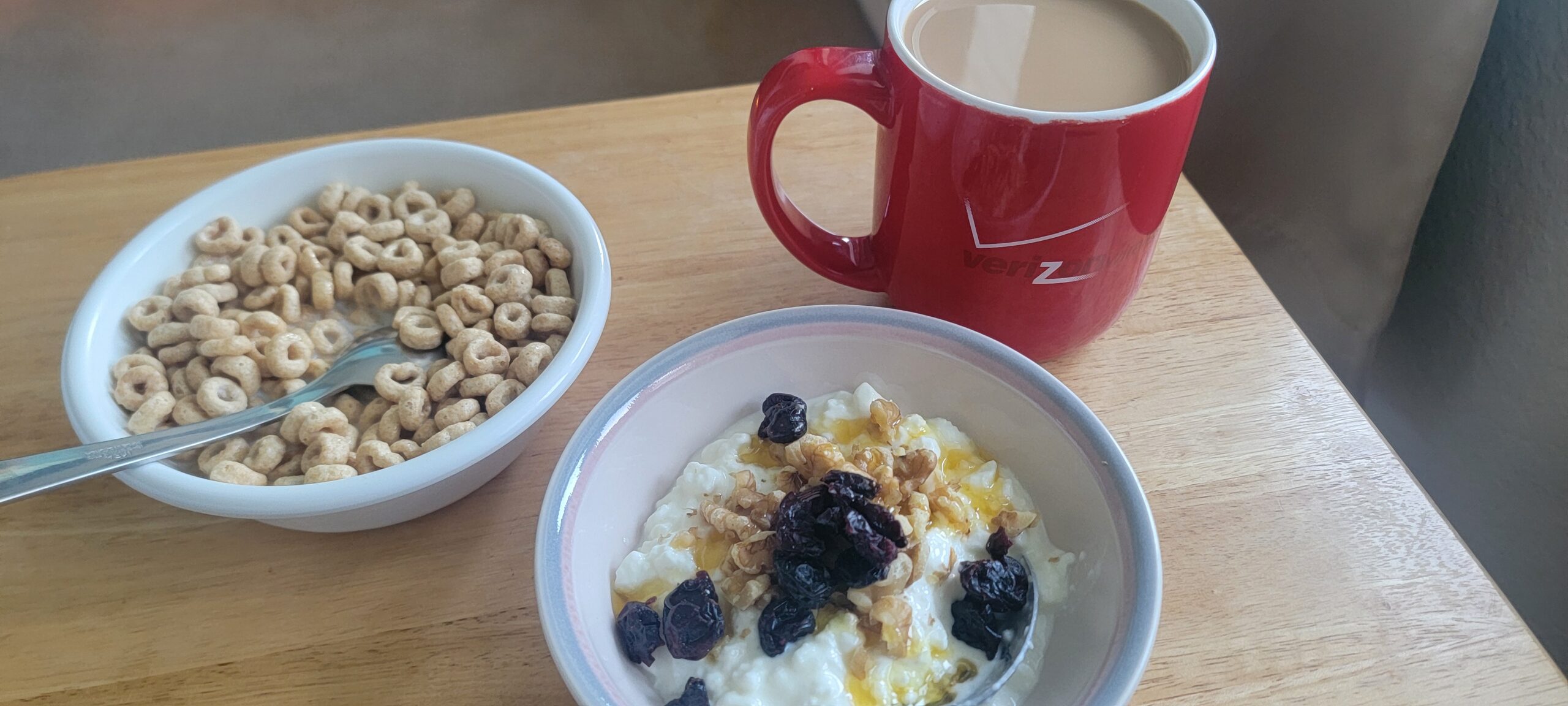
A breakfast spread featuring a white bowl filled with 1 cup of creamy cottage cheese topped with scattered walnut pieces, dried cranberries, and a drizzle of golden honey; a colorful cereal bowl containing Honey Nut Cheerios submerged in whole milk; and a steaming mug of black coffee lightened with a splash of milk and sweetened with a touch of honey, all arranged on a simple wooden table.

Breakfast

1. A Cup of Cottage Cheese with Walnuts, Cranberries, and Honey

  • Cottage Cheese (1 cup):
    • Assuming full-fat cottage cheese (4% fat), 1 cup (about 225g) = 220 calories and 25 grams of protein.
  • Walnuts:
    • Assuming 1 ounce (about 14 halves or 28g), a common add-in = 185 calories and 4.3 grams of protein.
  • Dried Cranberries:
    • Assuming 1/4 cup (about 30g), a typical topping = 123 calories and 0.1 grams of protein.
  • Honey:
    • Assuming 1 tablespoon (21g), a standard drizzle = 64 calories and 0 grams of protein.

Subtotal:

  • Calories: 220 + 185 + 123 + 64 = 592 calories.
  • Protein: 25 + 4.3 + 0.1 + 0 = 29.4 grams of protein.

2. A Bowl of Honey Cheerios with Whole Milk

  • Honey Nut Cheerios:
    • Assuming a standard “bowl” is 1.5 cups (about 54g, based on typical serving size) = 202 calories and 4.5 grams of protein.
  • Whole Milk:
    • Assuming 1 cup (240ml), a common amount for a bowl of cereal = 150 calories and 8 grams of protein.

Subtotal:

  • Calories: 202 + 150 = 352 calories.
  • Protein: 4.5 + 8 = 12.5 grams of protein.

3. Coffee with Milk and Honey

  • Black Coffee:
    • Negligible calories and protein (about 2 calories, 0g protein per cup).
  • Whole Milk:
    • Assuming 2 tablespoons (30ml), a typical splash = 19 calories and 1 gram of protein.
  • Honey:
    • Assuming 1 teaspoon (7g), a common coffee sweetener = 21 calories and 0 grams of protein.

Subtotal:

  • Calories: 2 + 19 + 21 = 42 calories.
  • Protein: 0 + 1 + 0 = 1 gram of protein.

Grand Total

  • Calories: 592 (cottage cheese mix) + 352 (Cheerios) + 42 (coffee) = 986 calories.
  • Protein: 29.4 (cottage cheese mix) + 12.5 (Cheerios) + 1 (coffee) = 42.9 grams of protein.

Lunch
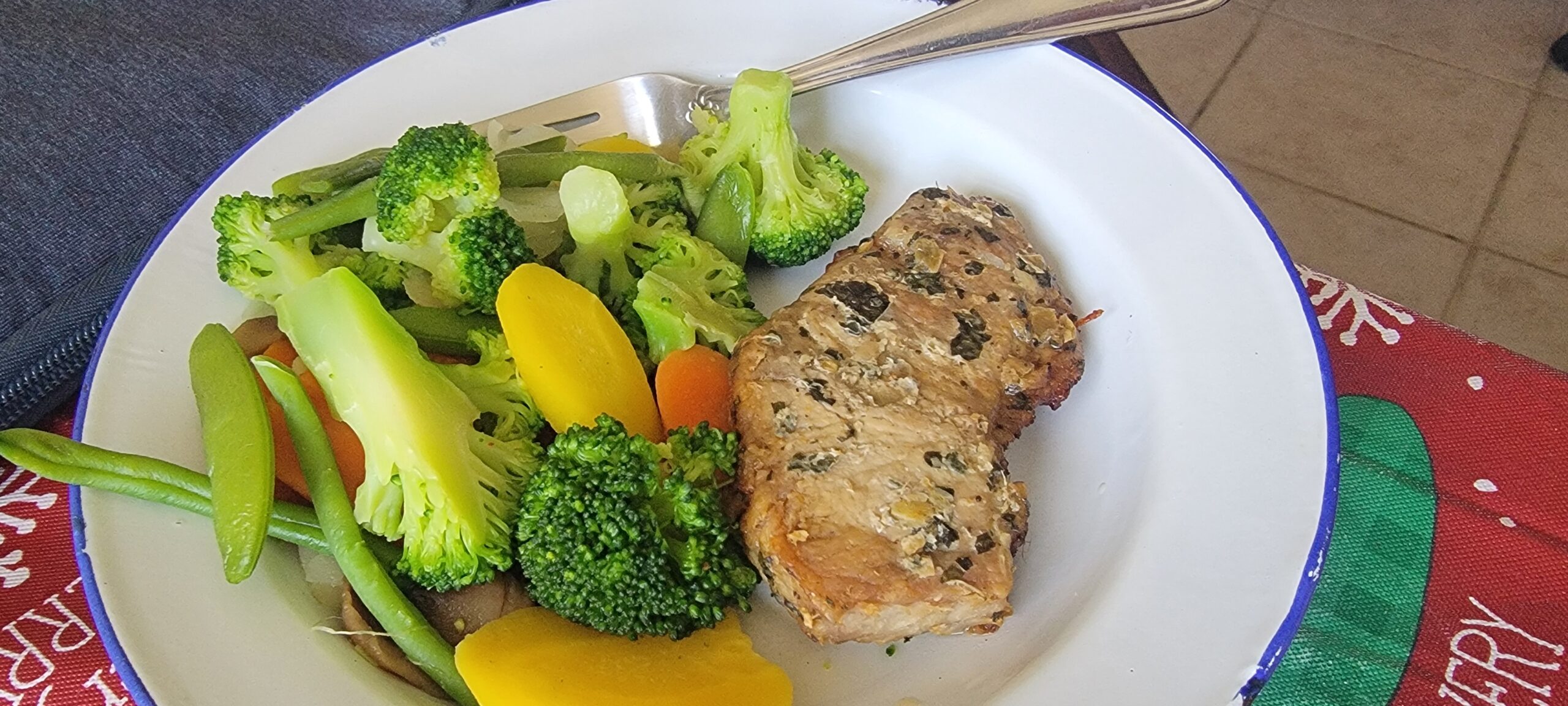
A simple lunch plate featuring 1.5 cups of steamed mixed vegetables, including vibrant green broccoli, sliced orange carrots, and bright green peas, arranged neatly with no added fat; alongside a 3-ounce portion of tender, lean pork loin, cooked without additional fats, served on a plain white dish against a minimalist background.

Steamed Vegetables (1.5 cups)

  • Assumption: A mix of steamed vegetables (e.g., broccoli, carrots, peas) with no added fat.
  • Calories: Approximately 35 calories per cup (based on general steamed mixed vegetables).
    • 1.5 cups = 1.5 × 35 = 52.5 calories.
  • Protein: Approximately 2.4 grams per cup.
    • 1.5 cups = 1.5 × 2.4 = 3.6 grams of protein.

Pork (unspecified amount)

  • Assumption: Since no quantity is given, I’ll assume a typical serving size of 3 ounces (85 grams) of cooked lean pork loin, which is a common portion to pair with vegetables.
  • Calories: Approximately 200 calories for 3 ounces of steamed or cooked lean pork loin (no added fat).
  • Protein: Approximately 25 grams for 3 ounces.

Total Estimate

  • Calories: 52.5 (vegetables) + 200 (pork) = 252.5 calories.
  • Protein: 3.6 (vegetables) + 25 (pork) = 28.6 grams of protein.

Snack

This is my protein drink which whole milk, peanut butter and a banana.

1. Whole Milk (10 oz)

  • Volume Conversion: 10 oz of whole milk is approximately 1.25 cups (since 8 oz = 1 cup).
  • Calories: Whole milk has about 150 calories per cup.
    • 1.25 cups × 150 calories = 187.5 calories.
  • Protein: Whole milk has about 8 grams of protein per cup.
    • 1.25 cups × 8 grams = 10 grams of protein.

2. Peanut Butter (2 tablespoons)

  • Serving Size: 2 tablespoons of peanut butter is about 32 grams (standard for most brands).
  • Calories: Peanut butter (smooth, unsalted) has about 190 calories for 2 tablespoons.
    • 190 calories.
  • Protein: Peanut butter has about 8 grams of protein for 2 tablespoons.
    • 8 grams of protein.

3. Banana (1 medium)

  • Assumption: A medium banana weighs about 120 grams (a typical size, 7-8 inches long).
  • Calories: A medium banana has about 90 calories.
    • 90 calories.
  • Protein: A medium banana has about 1.1 grams of protein.
    • 1.1 grams of protein.

Total Estimate

  • Calories: 187.5 (whole milk) + 190 (peanut butter) + 90 (banana) = 467.5 calories.
  • Protein: 10 (whole milk) + 8 (peanut butter) + 1.1 (banana) = 19.1 grams of protein.

Dinner
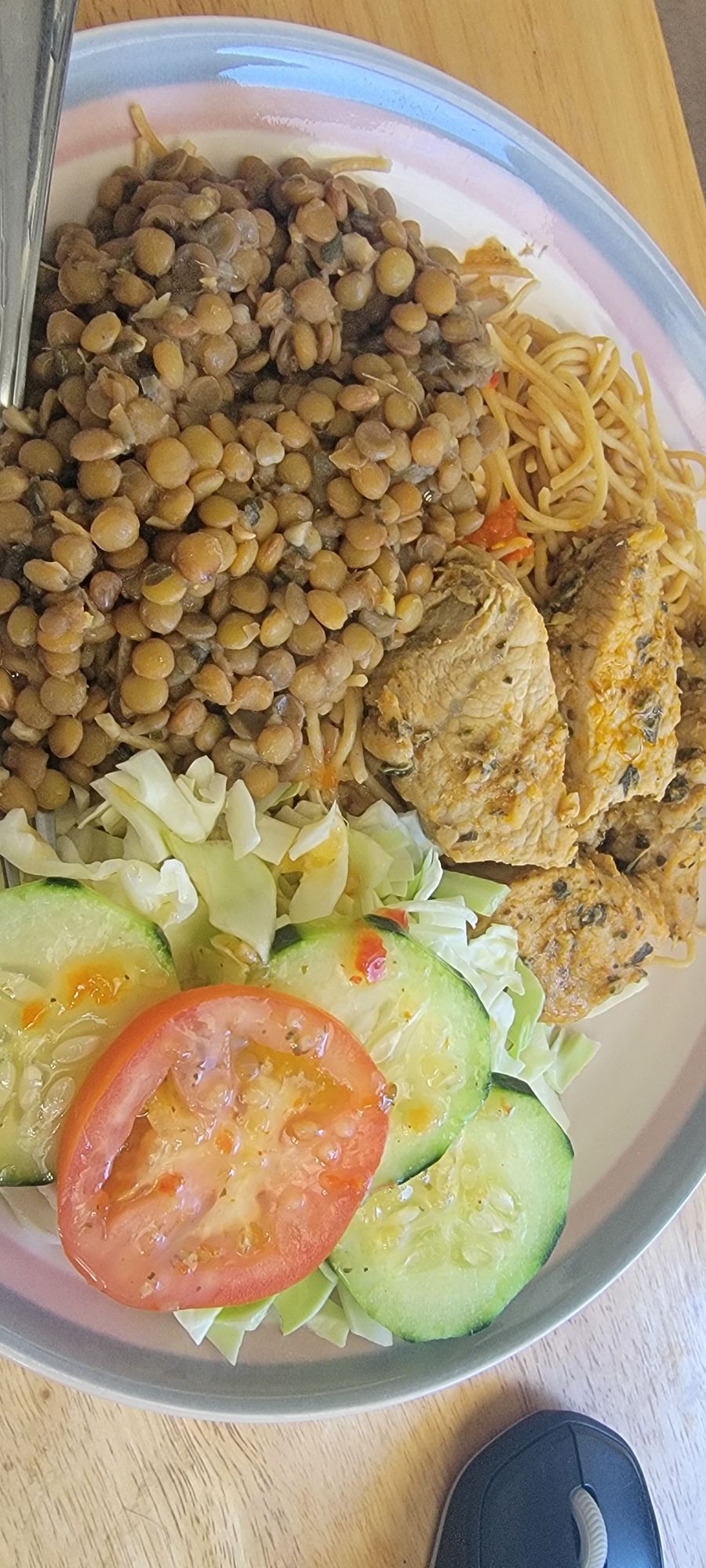
Dinner

1. Cooked Lentils

  • Assumption: About 1/2 cup of cooked lentils (approximately 100 grams), as estimated from the image.
  • Calories: 115 calories per 1/2 cup.
    • 115 calories.
  • Protein: 9 grams per 1/2 cup.
    • 9 grams of protein.

2. Whole Wheat Spaghetti with Sauce

  • Assumption: About 1 cup of cooked whole wheat spaghetti (approximately 140 grams) with a light tomato-based sauce, around 1/4 cup (60 grams).
  • Whole Wheat Spaghetti:
    • Calories: Cooked whole wheat spaghetti has about 125 calories per cup (slightly fewer than regular spaghetti due to higher fiber content).
      • 125 calories.
    • Protein: Whole wheat spaghetti has about 7 grams of protein per cup (higher than regular spaghetti due to the whole grain).
      • 7 grams of protein.
  • Tomato Sauce:
    • Calories: A basic tomato sauce has about 20 calories per 1/4 cup (no added oil or cheese assumed).
      • 20 calories.
    • Protein: Tomato sauce has about 0.5 grams of protein per 1/4 cup.
      • 0.5 grams of protein.
  • Subtotal for Whole Wheat Spaghetti with Sauce:
    • Calories: 125 + 20 = 145 calories.
    • Protein: 7 + 0.5 = 7.5 grams of protein.

3. Pork Chops

  • Assumption: The pork chops look like about 3 ounces (85 grams) of cooked lean pork chop, a common portion size. I’ll assume they’re grilled or pan-cooked with minimal added fat, as no heavy sauce or breading is visible.
  • Calories: A 3-ounce lean pork chop (trimmed of visible fat) has about 200 calories.
    • 200 calories.
  • Protein: A 3-ounce lean pork chop has about 25 grams of protein.
    • 25 grams of protein.

4. Side Salad (Lettuce, Cucumber, Tomato)

  • Assumption: 1 cup of lettuce (30 grams), 1/2 a medium cucumber (100 grams), and 1/2 a medium tomato (90 grams), with no dressing.
  • Lettuce:
    • Calories: 5 calories per 1 cup.
      • 5 calories.
    • Protein: 0.5 grams per 1 cup.
      • 0.5 grams of protein.
  • Cucumber:
    • Calories: 8 calories per 1/2 medium cucumber.
      • 8 calories.
    • Protein: 0.3 grams per 1/2 medium cucumber.
      • 0.3 grams of protein.
  • Tomato:
    • Calories: 11 calories per 1/2 medium tomato.
      • 11 calories.
    • Protein: 0.5 grams per 1/2 medium tomato.
      • 0.5 grams of protein.
  • Subtotal for Salad:
    • Calories: 5 + 8 + 11 = 24 calories.
    • Protein: 0.5 + 0.3 + 0.5 = 1.3 grams of protein.

Total Estimate

  • Calories: 115 (lentils) + 145 (whole wheat spaghetti with sauce) + 200 (pork chops) + 24 (salad) = 484 calories.
  • Protein: 9 (lentils) + 7.5 (spaghetti with sauce) + 25 (pork chops) + 1.3 (salad) = 42.8 grams of protein.

Last snack
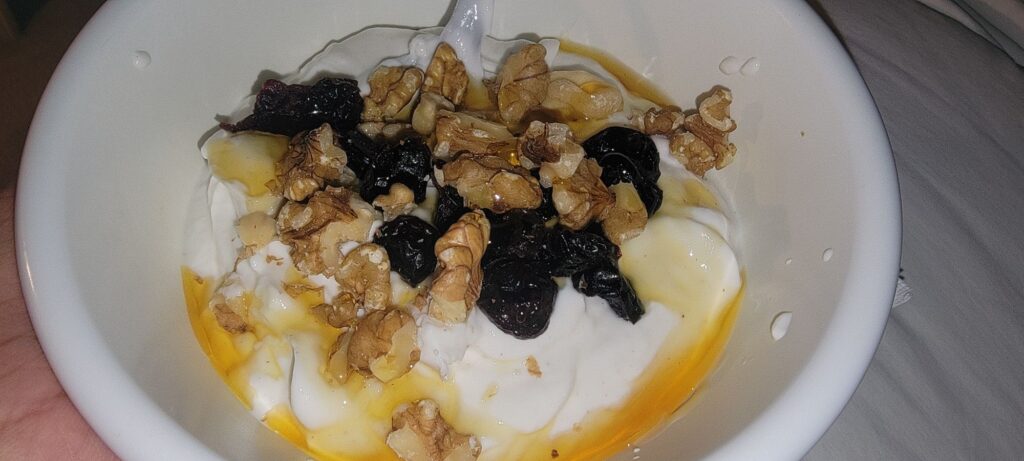
Greek Yogurt with walnuts, cranberries and honey

Ingredients:

  • Greek yogurt (1 cup, plain, non-fat): 100 calories, 17g protein
  • Walnuts (1/2 oz / ~7 halves): 92 calories, 2g protein
  • Dried cranberries (2 tbsp): 50 calories, 0g protein
  • Honey (1 tbsp): 64 calories, 0g protein

Total:

  • Calories: 306
  • Protein: 19g
Rasta climbing a coconut tree in Trinidad

Rasta Wisdom: Life Lessons from Trinidad’s Coconut Trees

A Lesson from a Rasta in Trinidad

When I was young in Trinidad, a Rasta stepped onto our property. He wore nothing but a loincloth, his long dreadlocks and beard flowing as he carried a cutlass in hand. I was terrified and hid behind my father. The Rasta approached one of our coconut trees and climbed it with ease. He picked a few coconuts, letting them drop to the ground at the base of the tree.

Once he descended, he took his cutlass and sliced open a coconut, drinking the fresh water inside. He handed one to my father and offered me one too, but I was too scared to accept. After my father finished drinking the coconut water, he returned it to the Rasta. With skill, the Rasta split the coconut open and fashioned a scoop from part of the shell, allowing my father to eat the soft jelly inside. When he was done, the Rasta took a few coconuts for himself and left a couple behind for us.

I turned to my father, confused and upset. “How can this Rasta just come onto our property and take our coconuts?” I asked. My father looked at me and said, “Curtis, the Rastas believe God put everything on this earth for everyone. We couldn’t climb that tree to get the coconuts, but he could—and he shared them with us.”

That moment taught me a profound lesson: God didn’t create borders. God made this world abundant, with more than enough for everyone. It’s man who changed the rules.

The Takeaway: This encounter with the Rasta, rooted in my Trinidadian upbringing, challenged my young mind’s ideas about property and borders. My father’s words offered a gentle yet profound shift in perspective—one that resonates far beyond that moment. Whether you see it as God’s design or nature’s gift, the world was made abundant, and it’s human rules that draw lines and create scarcity. This simple story carries a big heart, inviting us to rethink sharing, community, and what truly belongs to us all.

Curtis Matthews

High rep or Heavy training

56 Years Strong: Muscle Confusion and Crushing Leg Day (400lb Leg Press!)

Man, 56 and still pushing limits! Gotta love the feeling of proving people wrong. 40+ years in the gym and I’m still finding new ways to shock my muscles and keep them growing. Forget the typical routines, I’m all about mixing it up – heavy weights, high reps, you name it. Last week? 1000 air squats had my legs screaming (in a good way!). This week? 400 pounds for 100 reps on the leg press! Talk about muscle confusion! It’s not just cross-training, it’s an art form.

400lbs 100 reps

Speaking of art, check out the video of that leg press challenge. Pretty epic, right? Just a reminder that age is just a number when it comes to pushing yourself. But hey, it’s not all about the numbers. Consistency, clean eating, and that mind-muscle connection – those are my secrets. Gotta feel the workout, you know?

And speaking of clean, did I mention I’m 100% natural? That’s right, no shortcuts, just hard work and dedication. Turning 57 in a couple of weeks, and I wouldn’t feel stronger or more alive. This ain’t just about aesthetics, it’s about proving that anything is possible with the right mindset and approach.

So, here’s to defying expectations, embracing challenges, and proving that age and even genetics are just hurdles, not roadblocks. Keep pushing, keep experimenting, and keep inspiring! Natural and never slowing down – that’s my motto!

The Power of Positive Service-Oriented Thoughts

Our minds are constantly buzzing with activity, generating a continuous stream of thoughts that shape our perceptions, emotions, and actions. While the exact number of thoughts we have each day is difficult to quantify, estimates suggest that we experience tens of thousands of mental impressions daily. These thoughts range from conscious, deliberate considerations to fleeting, subconscious flickers.

The quality of our thoughts profoundly impacts our well-being and our interactions with the world around us. Negative thoughts can lead to feelings of anxiety, stress, and self-doubt, while positive thoughts promote optimism, resilience, and a sense of purpose.

In this realm of mental activity, cultivating a mindset of service to others holds immense power. When we focus our thoughts on helping and supporting those around us, we not only contribute to the betterment of our communities but also enhance our own happiness and fulfillment.

Here are some compelling reasons to embrace positive service-oriented thoughts:

  1. Expanding Our Perspective: By shifting our attention from our own concerns to the needs of others, we broaden our perspective and gain a deeper understanding of the world around us. This shift in focus allows us to appreciate the interconnectedness of humanity and recognize the impact we can have on others’ lives.
  2. Building Meaningful Connections: Service-oriented thoughts foster empathy and compassion, enabling us to connect with others on a deeper level. When we genuinely care about the well-being of others, we naturally seek opportunities to support and uplift them, strengthening our relationships and fostering a sense of belonging.
  3. Enhancing Personal Growth: Engaging in acts of service provides opportunities for personal growth and development. As we step outside our comfort zones to help others, we gain new skills, expand our knowledge, and cultivate a sense of purpose that enriches our lives.
  4. Promoting Emotional Well-being: Research suggests that helping others can boost our happiness levels and reduce stress. The act of giving back triggers the release of endorphins, the body’s natural feel-good chemicals, and fosters a sense of accomplishment and self-worth.
  5. Creating a Ripple Effect of Positivity: When we extend kindness and generosity to others, we inspire them to do the same, creating a ripple effect of positivity that extends far beyond our individual actions. Our positive service-oriented thoughts can ignite a chain reaction of compassion and goodwill, transforming communities and societies.

As we navigate the complexities of life, let us remember the transformative power of positive service-oriented thoughts. By consciously directing our mental energy towards acts of kindness and compassion, we not only elevate the lives of others but also enrich our own existence, creating a world where empathy, understanding, and mutual support flourish.